Taíno · in the present tense
The model is not the world.
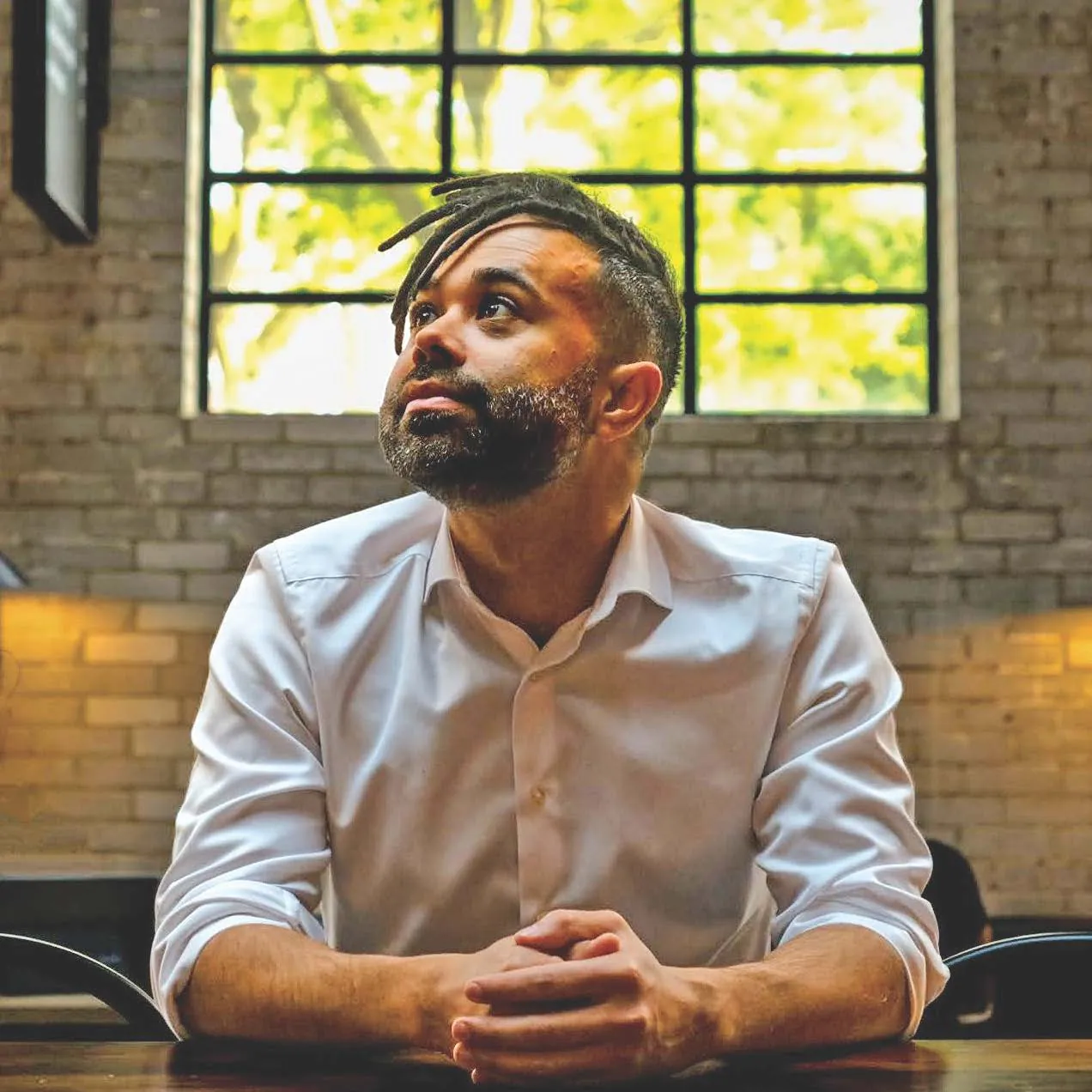
Jordan Loewen-Colón is an Indigenous Taíno technologist, Responsible AI strategist, scholar, educator, and organizational transformation consultant working at the intersection of artificial intelligence, culture, new media, and data justice.
The work moves across the lab, the classroom, the startup floor, and the policy arena, bringing technical fluency together with humanistic depth and a clear commitment to communities too often flattened by emerging technologies.
He earned a Ph.D. in the study of Religion from Syracuse University and an M.Div. from Princeton Theological Seminary in philosophy and theology. The intellectual path began with philosophy, then moved into the cultural and ethical consequences of AI, virtual reality, machine learning, and reality technologies. Drawing on critical theory, Indigenous data sovereignty, and thinkers such as Édouard Glissant, he defends the Right to Opacity: the principle that people, cultures, and knowledge systems should not be rendered fully transparent, extractable, or machine-readable simply because technology makes it possible.
As Cofounder and CEO of Supernova Immersives, he led a cross-functional team of engineers, scientists, and therapists in developing AI-augmented virtual reality for mental health. The company built a therapeutic VR experience informed by Internal Family Systems Therapy, entered the Founder Institute accelerator in Silicon Valley.
His policy work confronts what he calls Empire 2.0 — the new wave of digital extraction in which Indigenous languages, biometric data, cultural knowledge, and territorial information are absorbed into AI systems under the language of innovation and open data. He has worked as a Tech Policy Fellow at the Aspen Institute, drafting recommendations bringing OCAP® and the CARE Principles into conversation with Access-and-Benefit-Sharing protocols.
At Queen's University he teaches AI, Ethics, and policy at the Smith School of Business and Department of Computing, designing more than twelve courses and evaluating over a thousand student projects. He is currently drafting the manuscript for the forthcoming book Reality Technologies. He also writes poetry as al colibrí.
· Currently thinking about
- The difference between an AI model and an AI system, and why bookers keep using one word when they mean the other.
- What an "ensemble" of human and machine judgment looks like in a workflow that has to ship next quarter.
- Whether opacity can be a design constraint and not just a value statement.
- Glissant on relation and the Right to opacity.
· Lineages
Names and texts my work answers to. Neither exhaustive nor ranked. The list updates when the reading list does.
- Édouard Glissant
- Sylvia Wynter
- Katherine Hayles
- Vine Deloria
- Gilles Deleuze
- Ruha Benjamin
Updated May 2026.